
Marina Yee
A woman, fashion designer, and artist in one




Intro

Who was she?
Marina Yee was one of the members of the fashion group called the Antwerp Six. She was often described as the most "elusive" member of the group and is probably the least recognized member.
She was a sensitive and deeply creative soul, she spent much of her life questioning where she belonged and whether she saw herself as a fashion designer, an artist, or something in between. Yet behind this insecurity, there was someone with a strong visual identity, whose style, knowledge and creativity inspired many around her.
Despite her quieter presence in fashion history, Marina was one of the most important pioneering fashion designers who put the Belgian fashion scene of the 1980s on the international map.
If you want to know more about Marina, listen to her story in this beautiful interview by Galerie Sofie Van de Velde.


Chapter 1

Beginnings
Moving a lot
Marina's childhood was marked by constant change. Before the age of fifteen, her family had moved at least eleven times across Belgium. Home was not always an easy place either; her father's temper made the atmosphere unpredictable, and friends rarely came over. Marina spent much of her time alone, eventually describing herself as a "lone wolf".
Worlds of her own making
Spending so much time on her own taught her how to fill her days with small worlds of her own making. She wandered outside gathering wildflowers into bouquets, baked cakes at home and, eventually, began sewing. One interest seemed to lead naturally into another, as she found different ways to keep her hands and imagination occupied.
She never related to other children, and became an odd, dreamy, self-sufficient child, who entertained herself by gathering bouquets of wild flowers, baking cakes, and, eventually, sewing clothes.
— Avery Trufelman
Her mother, objects, and the past
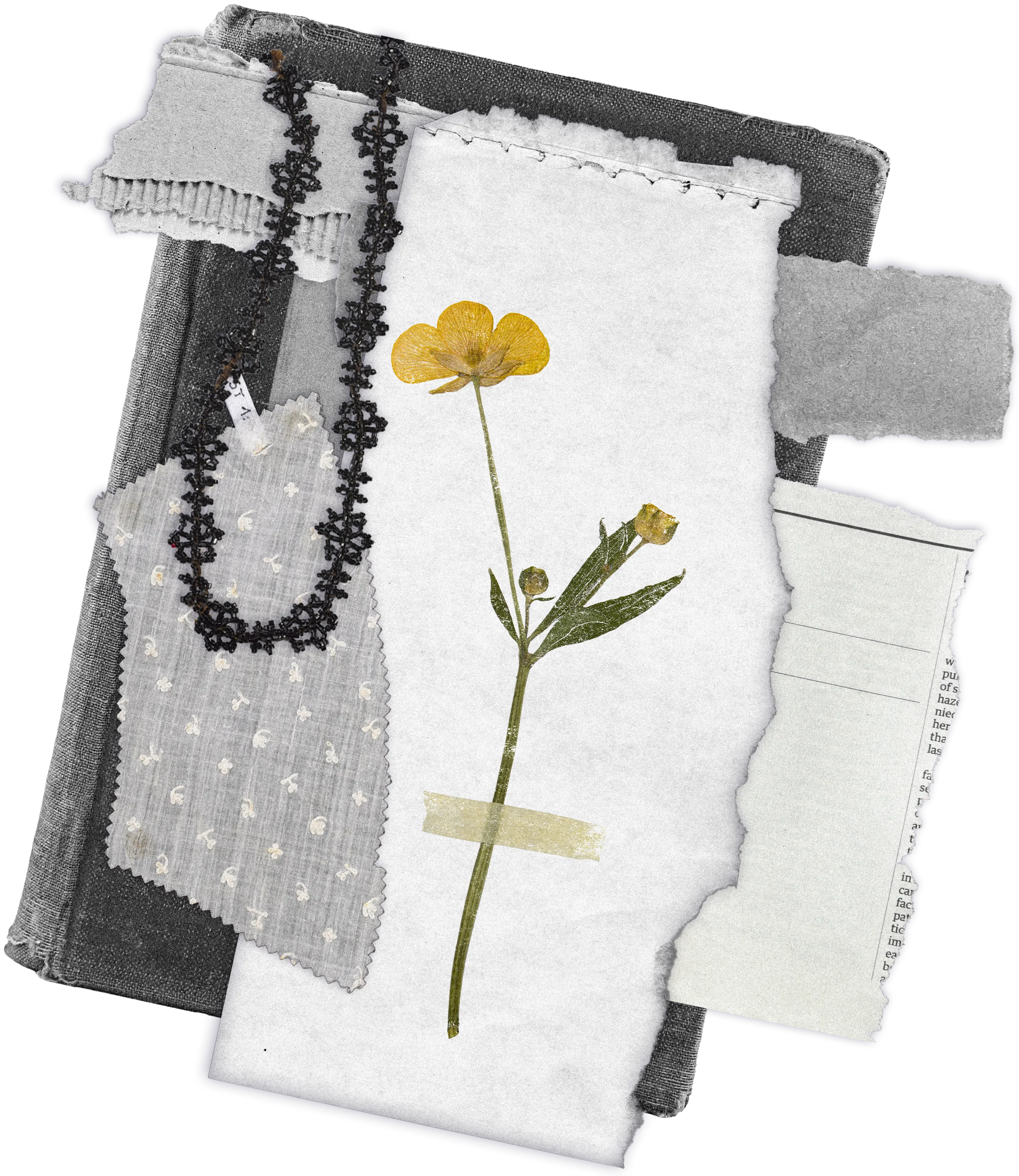
Her mother, later described by Marina as someone with great taste, opened up yet another world to her. She ran an antique shop, a place with old pieces of furniture, textiles and garments — objects that had already belonged somewhere, to someone, before finding their way into the shop. Surrounded by these materials and stories from the past, she taught Marina how to sew, giving her yet another way to experiment with what she was surrounded by.

Fashion for herself
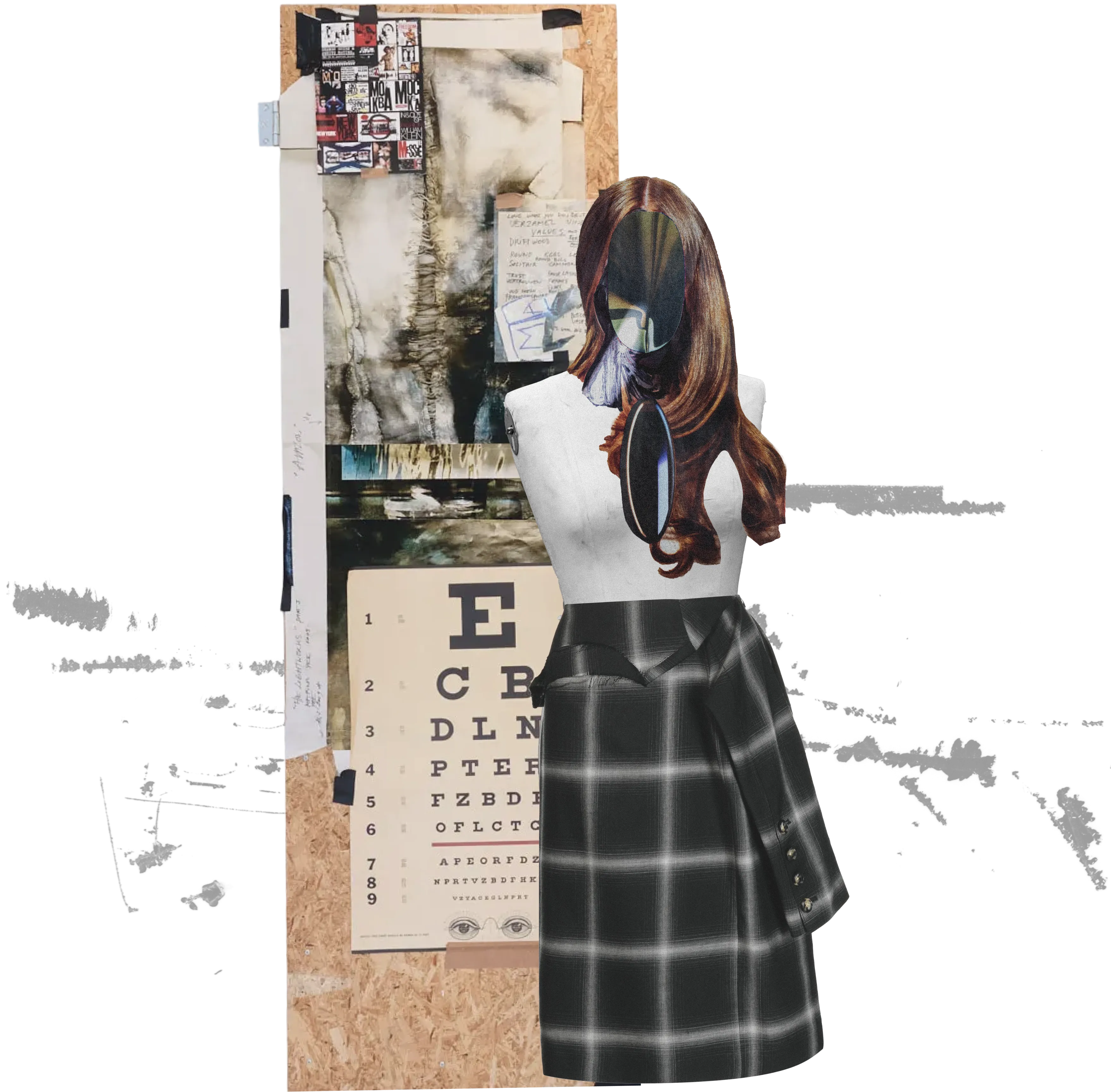
As she became more comfortable with sewing, Marina began using it to dress herself up. As a teenager, she made her own high-waisted velvet skirts, later described as "a bit gothic", and wore them with her mother's vintage boots from Paris, combined with dark kohl around her eyes. Piece by piece, she was developing a look that was distinctly her own, built from handmade clothes, old finds and unusual combinations.

Combining things
Marina's curiosity seemed to move freely from one thing to another. She could be gathering flowers one moment, sewing the next, or finding new ways to wear something old. She experimented with whatever was around her, combining things that interested her and letting one idea naturally lead to another.


Chapter 2
Formative Years
St. Lukas Institute of Fine Arts and Martin Margiela
By fifteen, Marina's world was beginning to open up beyond the one she had created at home. She enrolled at the St. Lukas Institute of Fine Arts in Hasselt, bringing the interests she had explored mostly on her own into the art school.
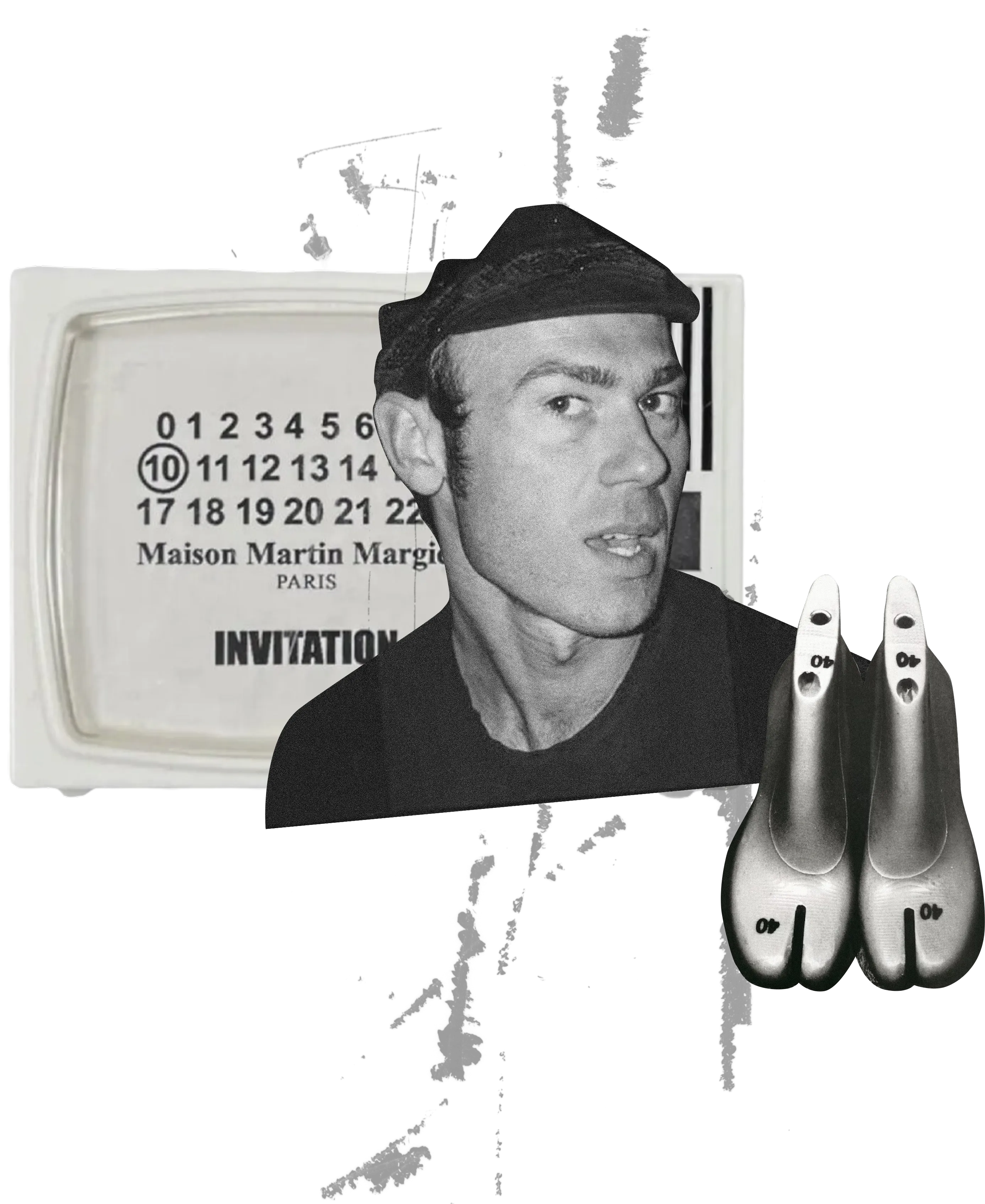
Here, her distinctive way of dressing caught the attention of Martin Margiela, another soon to be famous fashion designer. He was drawn to what he called Marina's "crazy combinations", and the two quickly became close because of their shared fascination with clothing and art. For Marina, this was also the beginning of a new kind of creative companionship — she now had someone with whom she could exchange ideas instead of exploring them entirely on her own.
He loved my weird combinations. He thought they were fantastic. And so we had something in common, a shared passion for fashion and clothes.
— Marina Yee
Show more: Some cultural context
Some cultural context
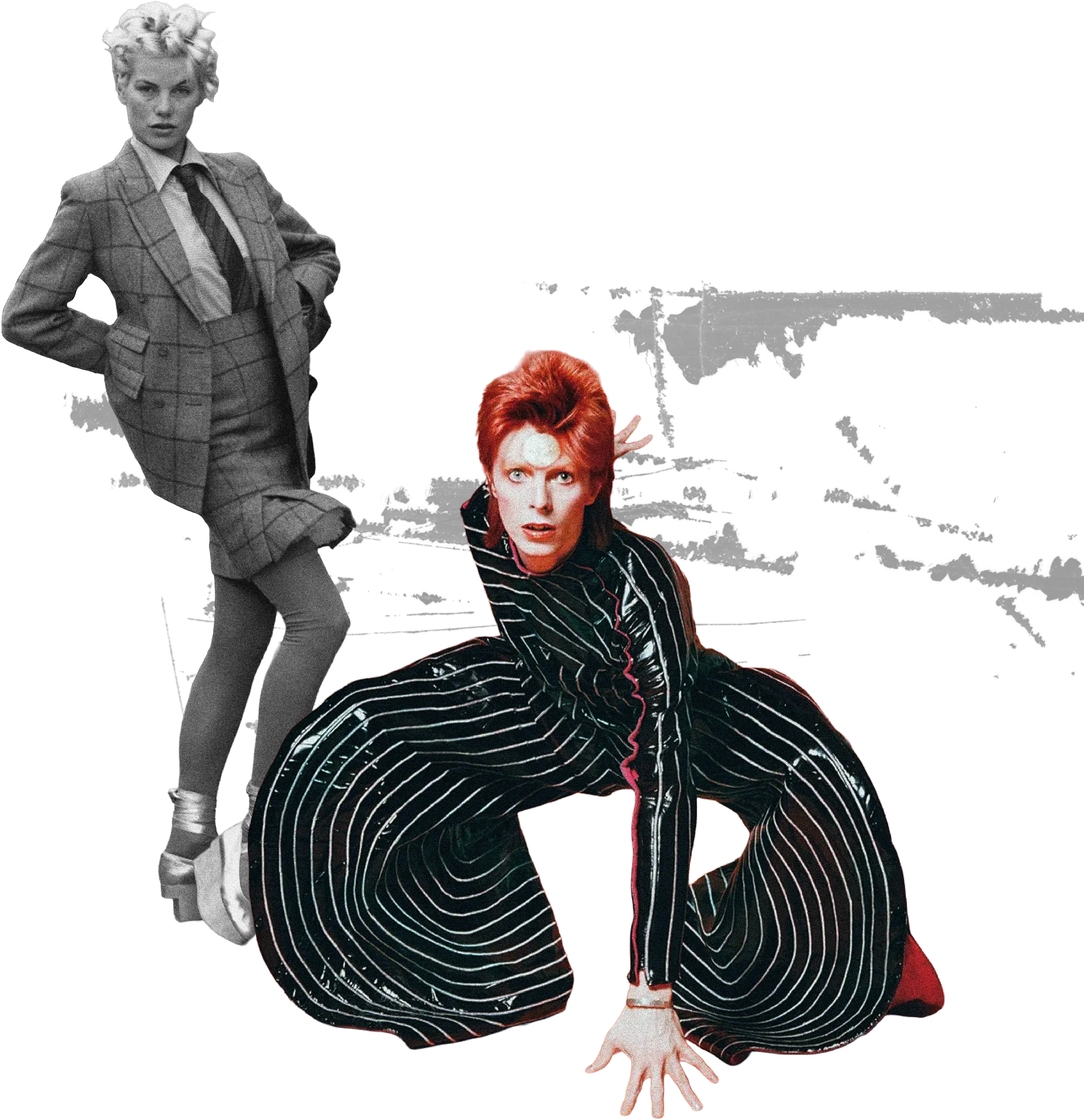
By the 1970s, David Bowie turned clothing, makeup and image into an essential part of performance, working with designers such as Kansai Yamamoto to create identities that could change from one appearance to the next. In London, punk pushed things even further. Vivienne Westwood and Malcolm McLaren brought music and clothing together around a scene that lived in shops, clubs and on the street rather than inside traditional couture.

The world around
At the same time, the world around Marina was changing too. The spirit of the late 1960s had pushed a younger generation to question the values and rules they had inherited, and that rebellion soon found its way into art, music and fashion. For young creatives, inspiration was no longer coming from the established fashion houses of Paris or Milan.
Show more: The Academy between 1963 to 1985
The Academy between 1963 to 1985
The fashion department from the Academy was founded in 1963 under Mary Prijot and Marthe Van Leemput. The department placed a strong emphasis on drawing, technique, elegance and good taste. Prijot admired Chanel and believed clothes should follow certain rules of propriety — even knees and elbows were considered better left covered. Former students later remembered the teaching as fairly old-school.
Royal Academy of Fine Arts
When Marina joined Martin at the Fashion Department of the Royal Academy of Fine Arts in Antwerp, her creative circle grew even more. She studied alongside Ann Demeulemeester, Dirk Van Saene, Dirk Bikkembergs and Dries Van Noten, while Martin and Walter Van Beirendonck were a year ahead. After years of exploring mostly on her own, Marina was now surrounded by people who were just as absorbed in fashion, arts, music and new ideas just as she was.

She "radiated fashion"
Fashion seemed to come naturally to Marina, not only through what she created, but through the way she carried herself. People who knew her at the time remembered that she simply "radiated fashion". Dirk Bikkembergs later recalled arriving at the Academy for his entrance exam and seeing Marina moving quickly through the corridor in a huge white parachute parka. As she walked, the coat caught the air and billowed around her, The image was so striking that Bikkembergs said that this encounter convinced him to study fashion.
Outspoken, opinionated, and bold
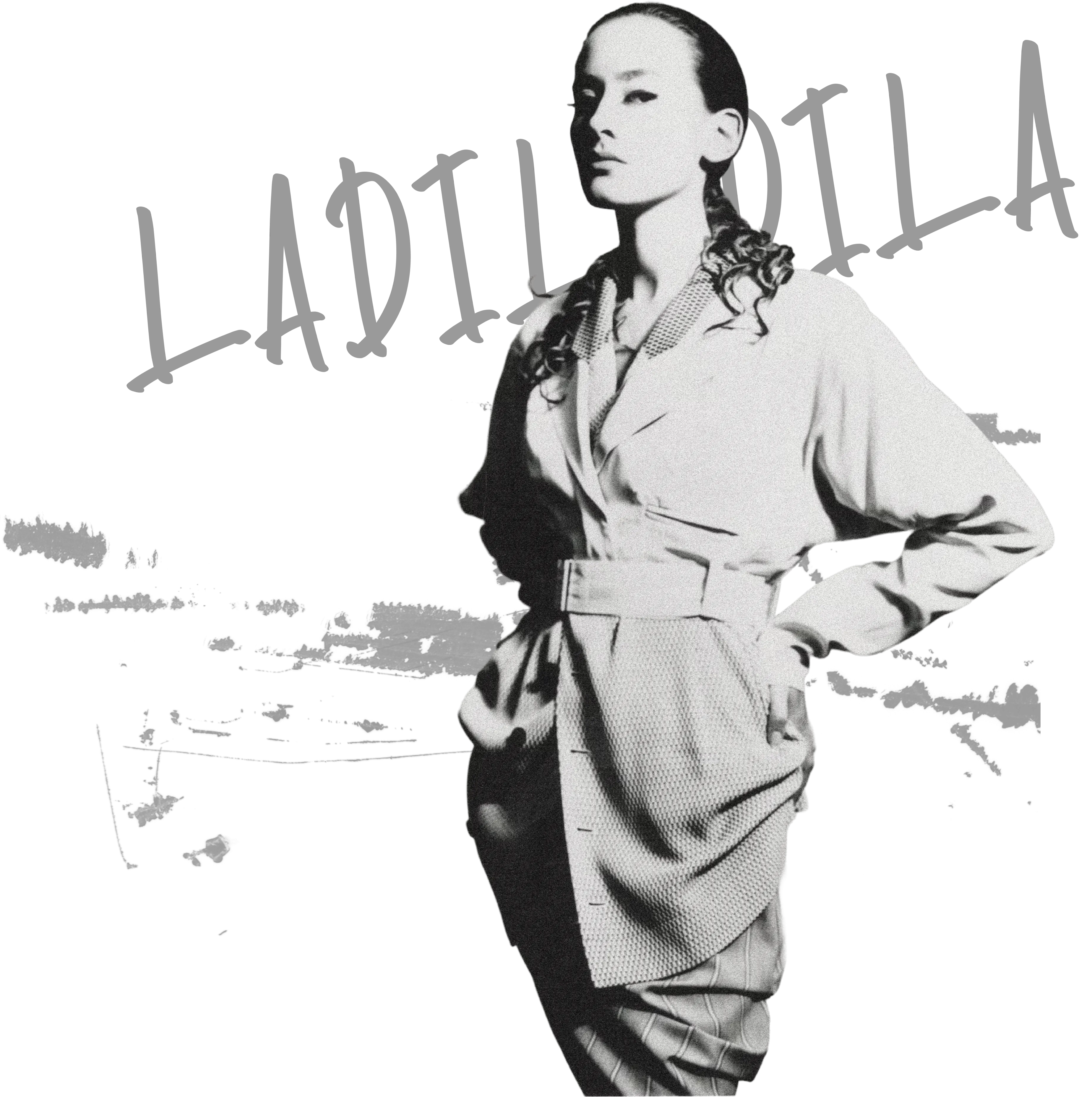
That same confidence was also present in the way Marina spoke about their future. She later remembered herself in those years as outspoken, opinionated and bold. When the group began wondering whether designers from Belgium could ever become known internationally, Martin doubted they could, but Marina already believed they could make their way beyond Belgium.
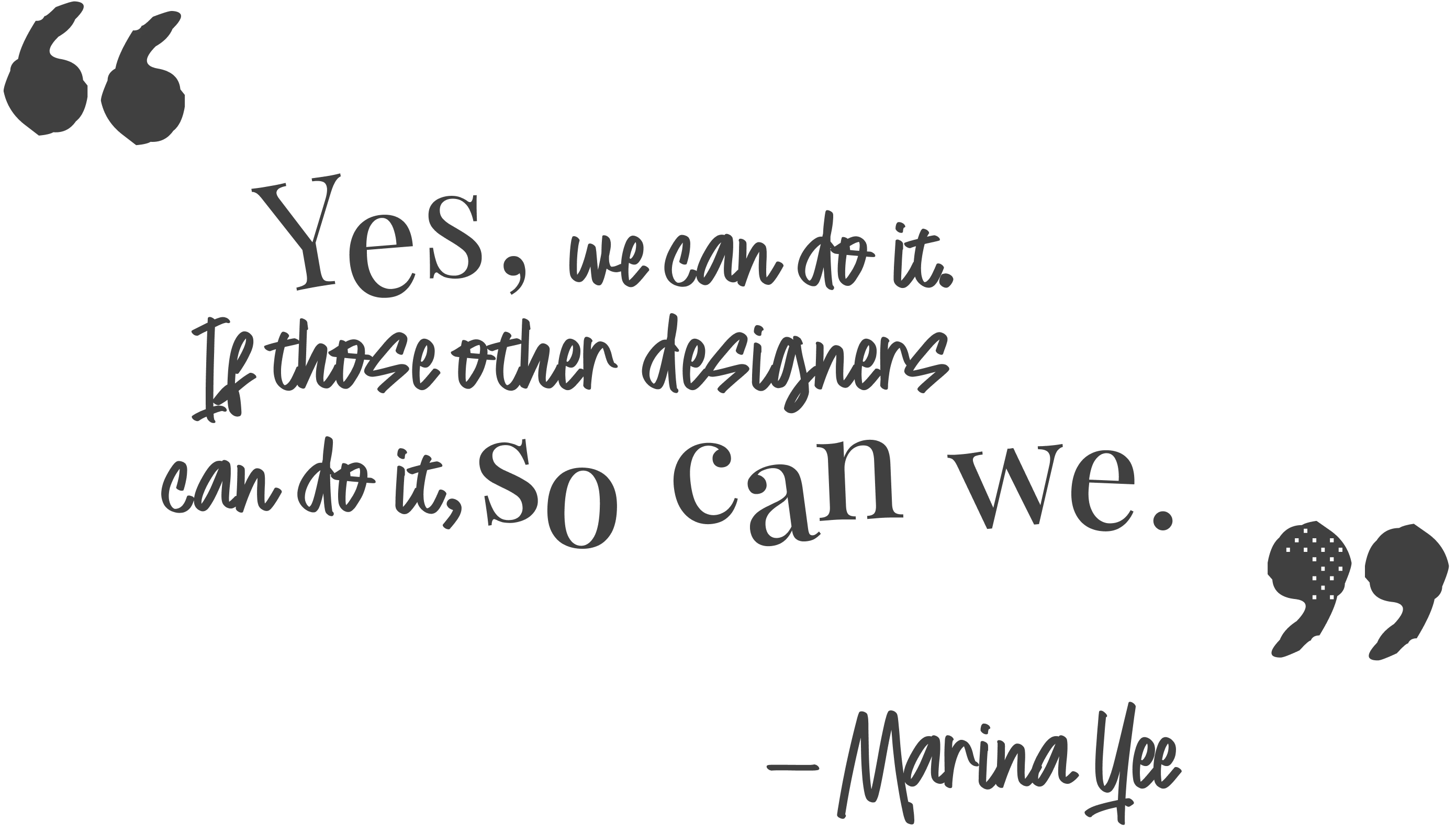
Yes, we can do it. If those other designers can do it, so can we.
— Marina Yee


Chapter 3

Momentum
Show more: London and the birth of Antwerp Six
London and the birth of Antwerp Six
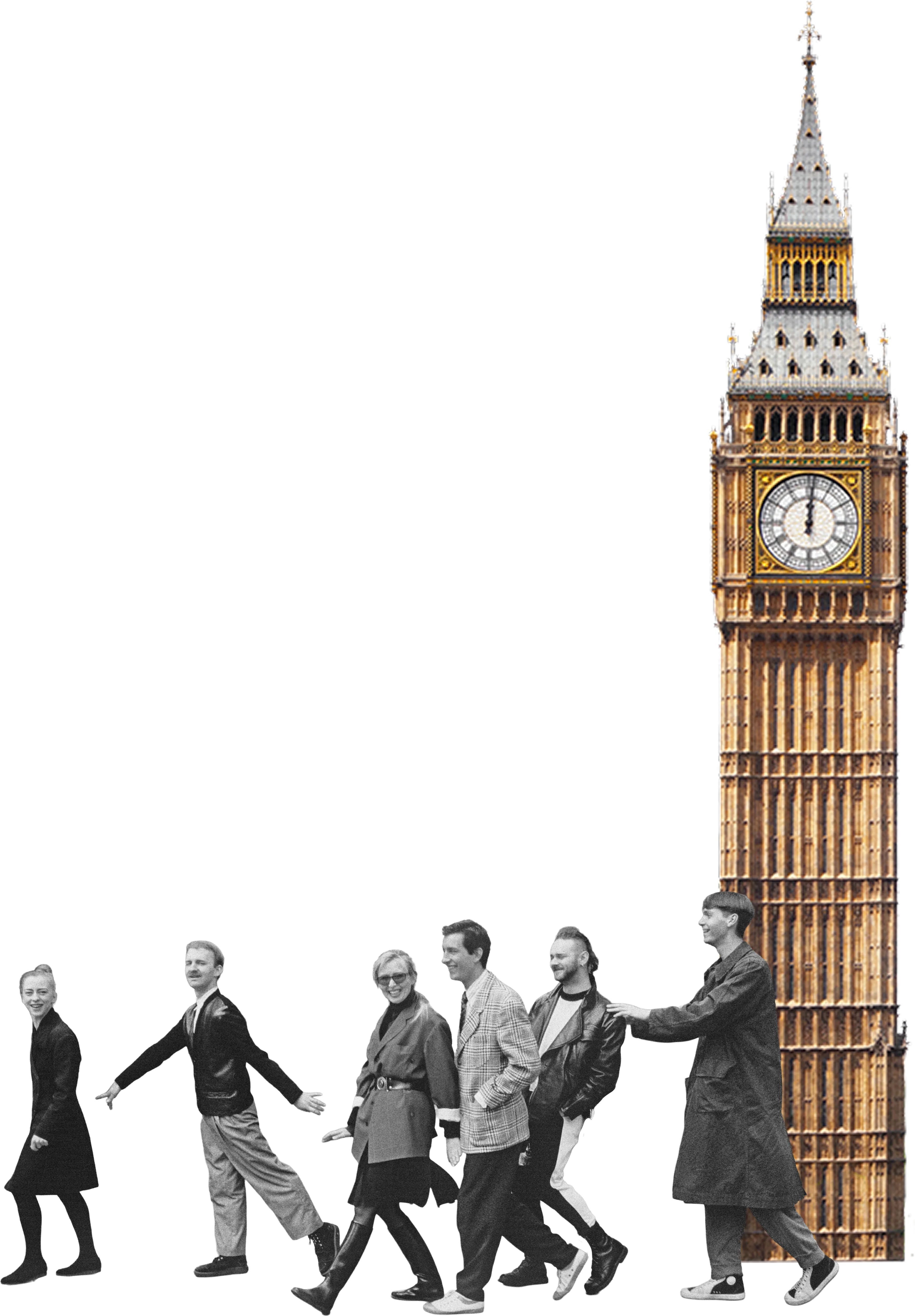
In 1986, together with Ann Demeulemeester, Dirk Bikkembergs, Dries Van Noten, Dirk Van Saene and Walter Van Beirendonck, Marina travelled to London to present at the British Designer Show. What began as a group of young designers from Antwerp suddenly caught international attention, and the six would soon become known as the Antwerp Six. The world outside Belgium was beginning to notice what they had been building together.

Taste of success
Success brought more than attention, and opportunities began arriving quickly: magazines wanted to feature them, manufacturers were interested in producing their collections, and Marina's own career began to grow beyond the small, experimental world she had known before. She worked for Belgian brands, received financial backing and started developing work under her own name.
What had once been driven mostly by instinct and curiosity was now entering a much larger system, one that was built around collections, production, shops and the expectation to keep on growing.

She was not ready
Marina began questioning whether she could picture herself in how her new life was starting to look. She later admitted that she struggled with the expectations that came with it. She missed appointments, kept people waiting and felt increasingly bad about the way she was functioning. Looking back, she simply described herself as: "not ready". More than the business itself, Marina was beginning to question:

The cherry on the top
At the same time, Marina's relationship with Martin Margiela was adding more uncertainty to what she was already feeling. As his career in Paris was taking shape, elements of Marina's own way of dressing and altering clothes — the cutting, layering, her hair and makeup — were visible in Margiela's work.
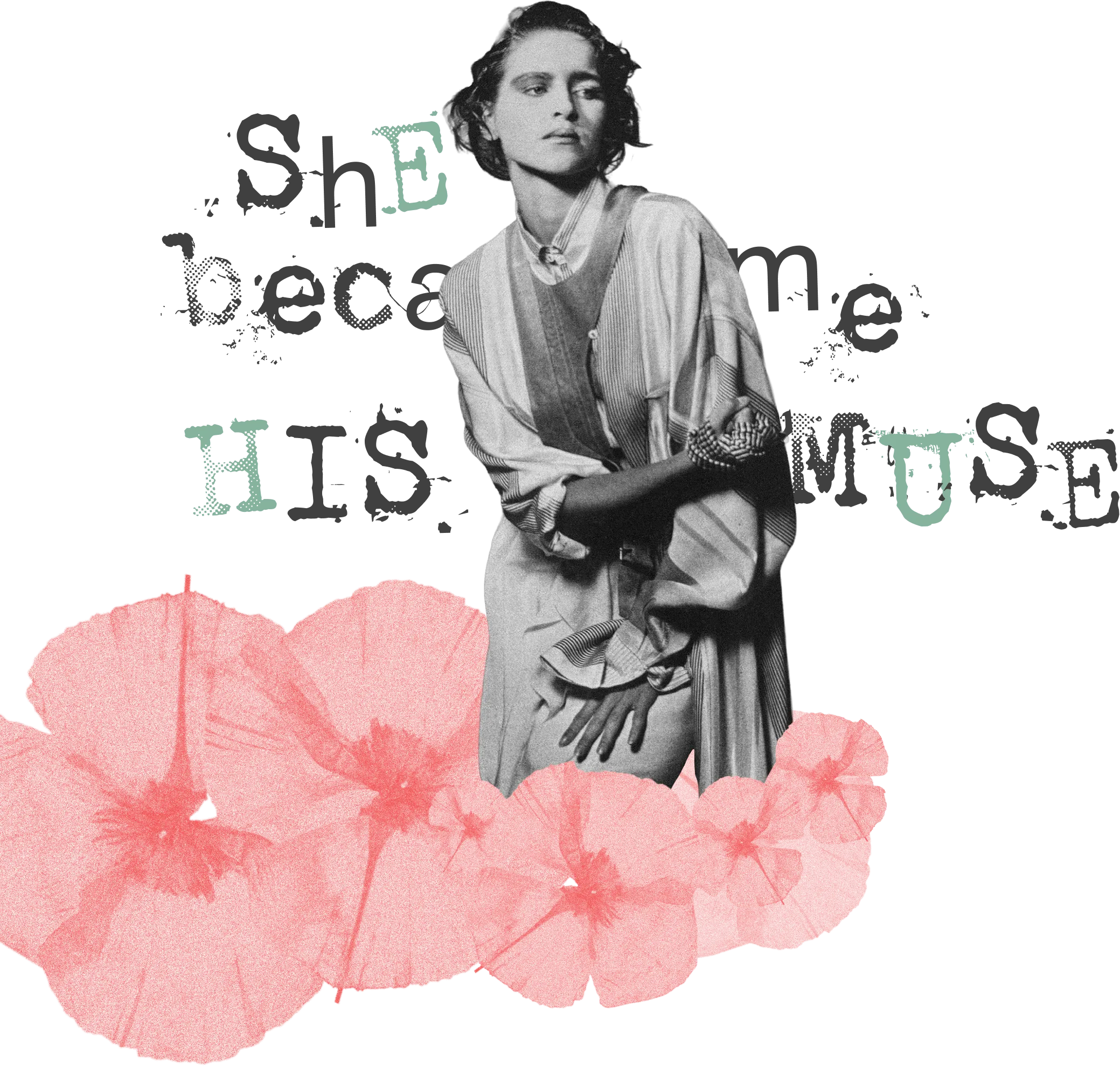
What might have looked from the outside like something that a young woman might dream of, only made the question of her own identity more difficult: if she was becoming part of someone else's creative expression, where did that leave room for her own? This made her want to find the creative voice that was entirely her own even more.

Crossroads
Marina had reached a crossroads. She could keep moving forward with the momentum that was unfolding around her, or step back and return to something familiar — making, experimenting and following her curiosity without knowing exactly where it would lead her. She did not have the answer yet, but she knew she needed the space to figure it out.


Chapter 4
Full circle
Back to Belgium
Once she decided to step back, Marina returned to Belgium and went back to what she knew best: creating.
Without trying to fit herself into one way of working, she began moving freely between different mediums again, following whatever sparked her curiosity and seeing where it would take her. In many ways, it echoed the world she had built for herself as a child — one where making could begin and end anywhere.

Artistic freedom
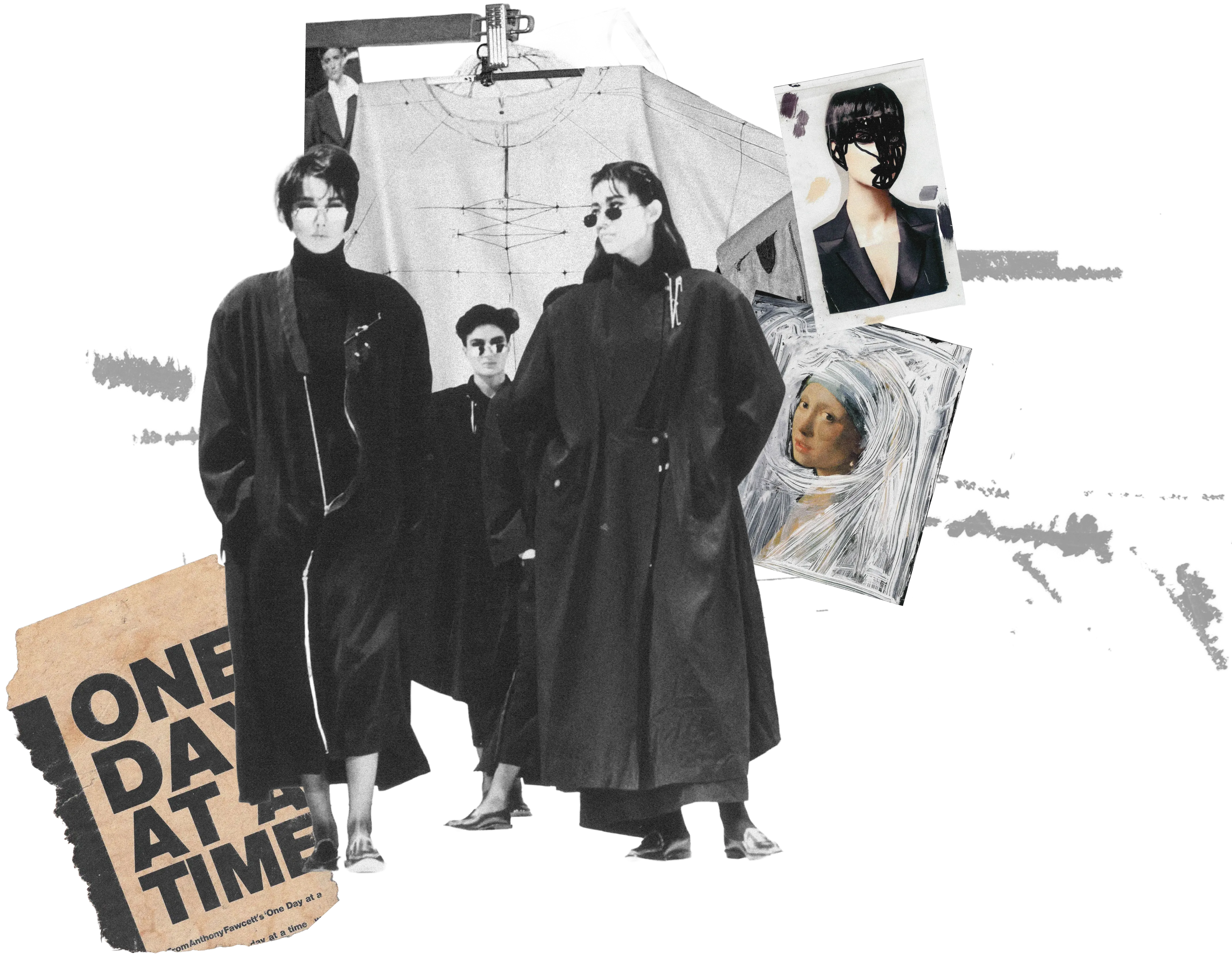
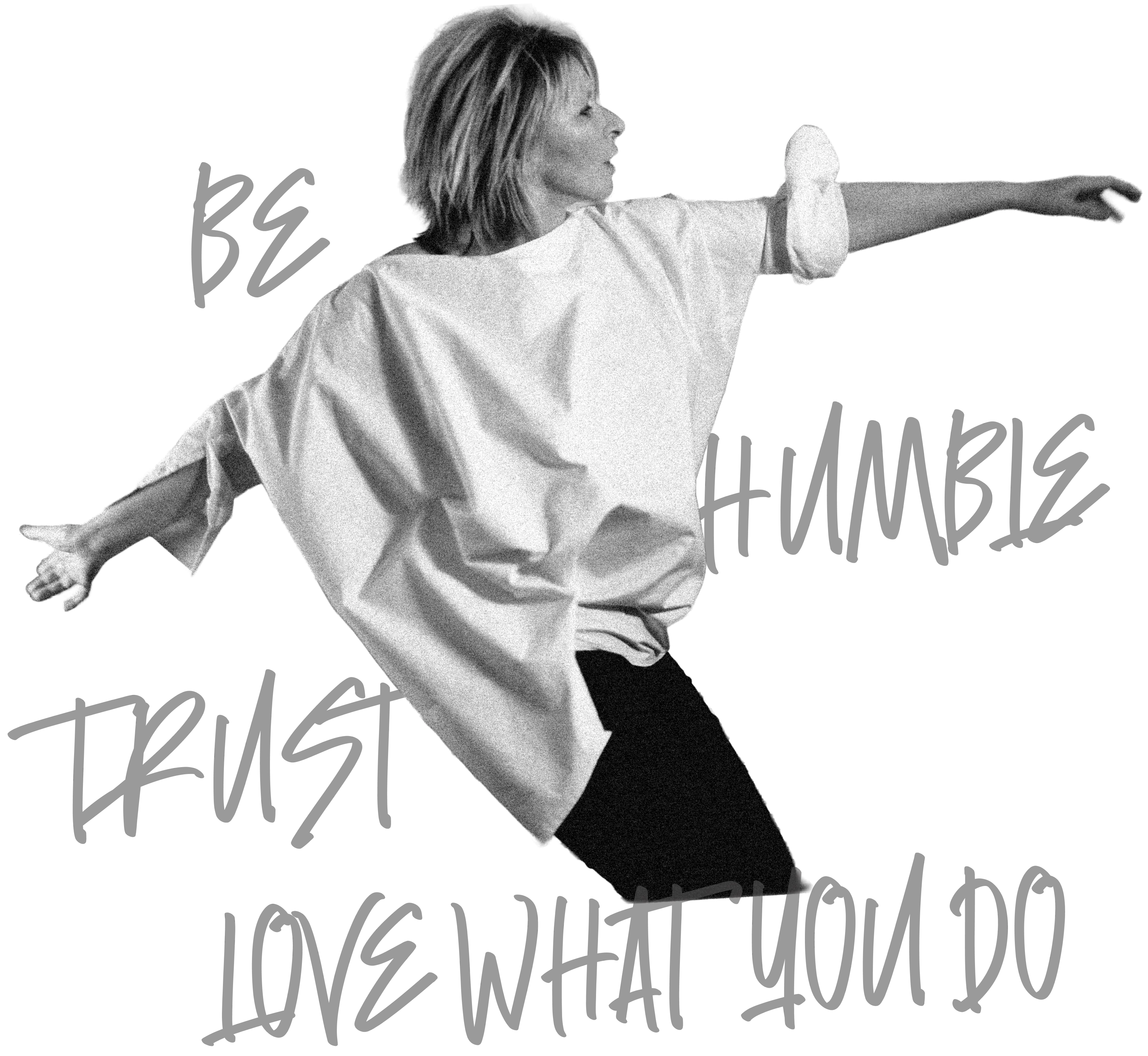
Her creativity spread in every direction. She designed costumes for theatre, worked on womenswear for Dirk Bikkembergs, taught drawing and fashion, painted, made collages and objects, experimented with interiors, and continued making clothes from second-hand materials in her apartments' studio. One medium seemed to open the door to another.
The more room she gave herself to experiment, the more she was feeling like herself again. During the years when she was less visible in the fashion industry, Marina continued drawing, designing, cutting, pasting and building an enormous body of work in the privacy of her studio. She kept going.
Coming back to the industry on her own terms
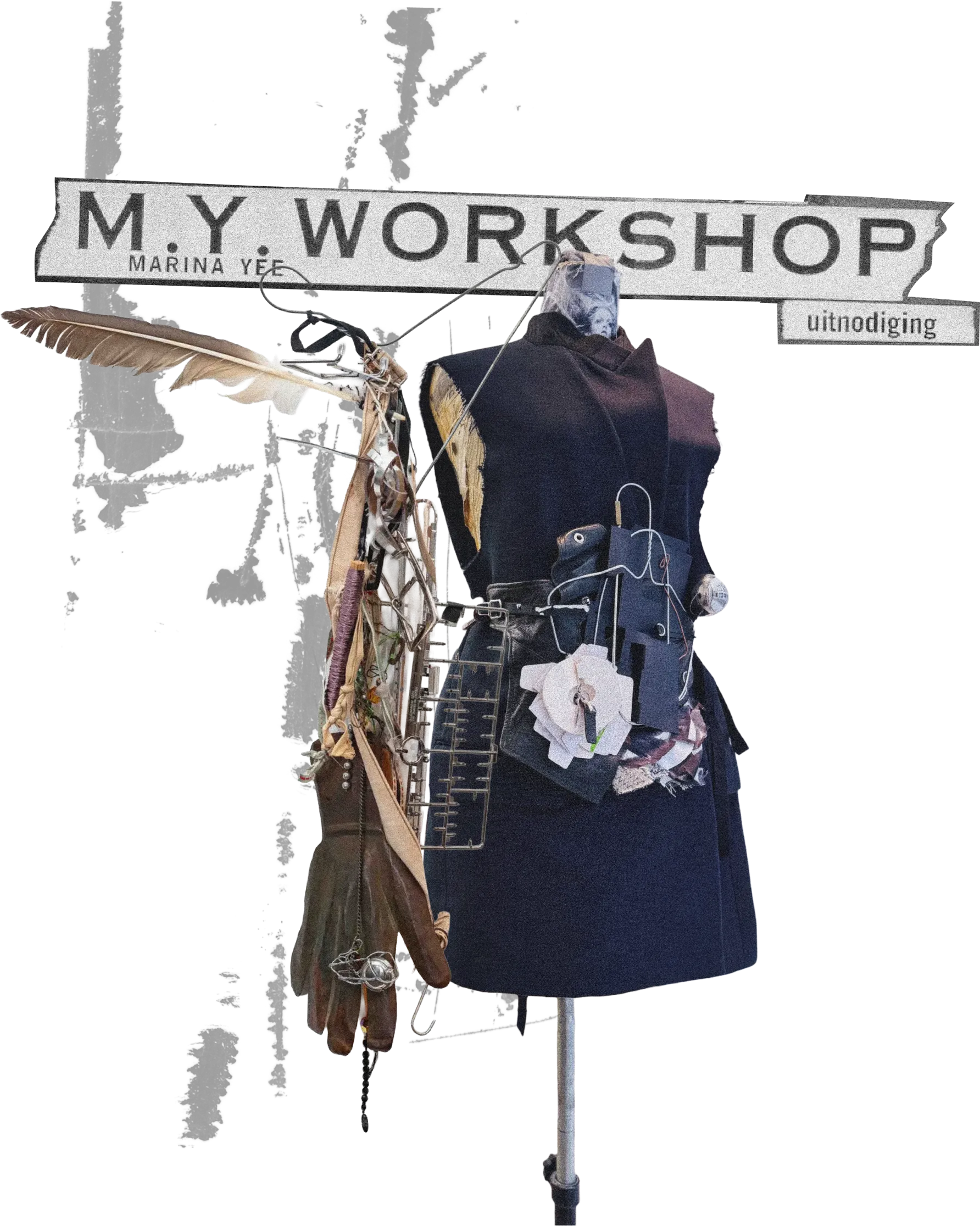
Years later, when she decided to step back in the spotlight of the fashion industry, the conditions were different. In 2018, she began working with LAILA TOKIO on the M.Y. Project in Japan. The scale was small, the team was limited, and there was no pressure to reproduce her ideas industrially. For the first time in a long while, the fashion world had changed so that it had enough room for Marina the fashion designer and for Marina the artist.
She was ahead of her time and the world had finally caught up with her
The world around Marina had changed too. Reworking, second-hand materials, smaller-scale production and slower ways of creating found a place within fashion. Ideas that had once made Marina difficult to fit into this system were now becoming in demand.
In a way, history seemed to be repeating itself: just as Marina's generation had once challenged what fashion was supposed to be, a new generation was questioning it again. Only this time, the space they were opening up looked remarkably close to the one Marina had long ago created for herself.